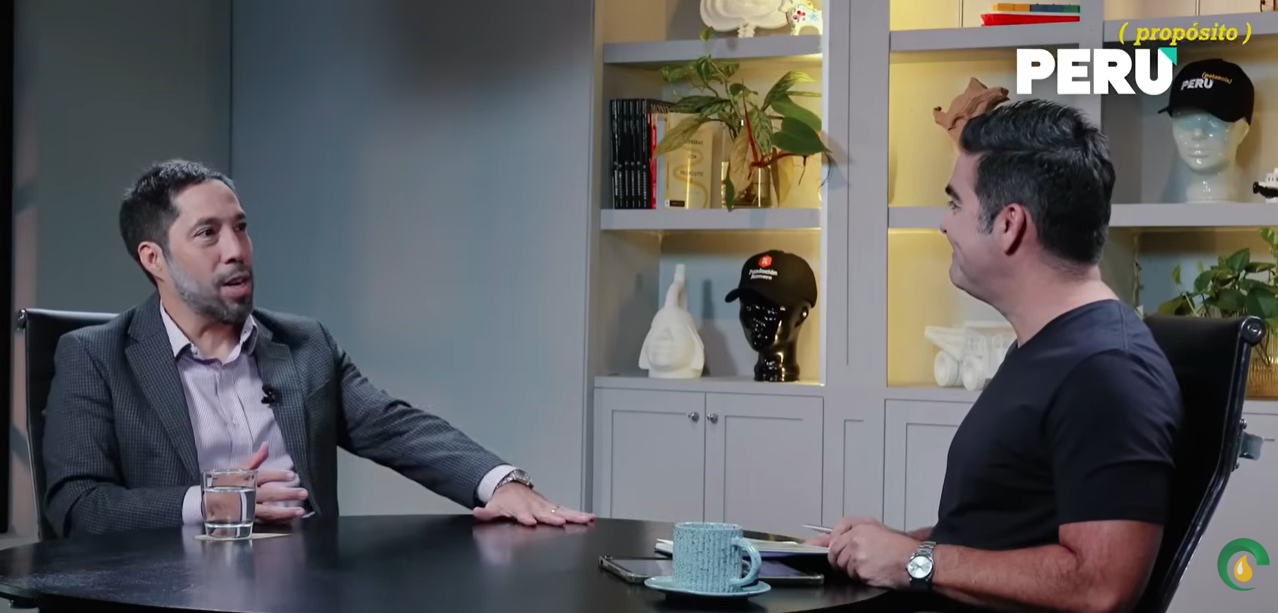
Most oil palm growers in Peru are smallholders, including former coca farmers, Ocho Sur’s Alfonso Morante said on Canal N’s “Perú Potencia.”
PUCALLPA, UCAYALI, PERU, November 27, 2026 /EINPresswire.com/ — An estimated 40,000 hectares of oil palm now in production in Peru stand on land once planted with illegal coca, according to Alfonso Morante Chávez, Chief Financial Officer of Ocho Sur, who also oversees legal, community relations, government affairs and public relations for the company’s operations in Peru. Speaking on Canal N’s “Perú Potencia,” Morante recalled that oil palm was among the alternatives used to replace that crop between 2000 and 2010.
Morante noted that at least 60% of oil palm growers in the country are smallholders.
For smallholders in Ucayali, the crop provides a steady income. Oil palm begins producing in its third year and bears fruit year-round from then on, allowing growers to harvest and sell their fruit bunches every two weeks. Morante compared that regularity to the pay of a salaried employee who is paid mid-month and at month’s end.
Demand is also reliable. In Ucayali, he added, eleven palm oil mills compete to buy the fruit. “If you’re going to plant something that has no market, you don’t plant it,” he said.
Ocho Sur’s mill processes fruit from roughly 2,000 hectares farmed by smallholders, in addition to the harvest from the 10,000 producing hectares on the company’s two estates. According to Morante, the Ucayali operation yields 5.5 tonnes of oil per hectare per year, compared with a global average of 3.5 tonnes. The oil is then transported by tanker truck to Chancay, where the company stores it for export.
In some Indigenous communities, the harvest continues even during floods. Morante described growers who set out by canoe to cut fruit bunches when water covers their plots, allowing them to keep earning income throughout the rainy season.
The conversation also addressed living conditions in the Amazon. Morante noted that in some communities people still drink water from oxbow lakes, streams and rivers. Calling for more effective use of public funds to close gaps in water and sanitation, he said: “The money is there, but we need to start acting.”
Comunicaciones Ocho Sur
OCHO SUR
contacto@ochosur.com
Visit us on social media:
LinkedIn
Instagram
Facebook
YouTube
Alfonso Morante Chávez, CFO of Ocho Sur, on Canal N’s “Perú Potencia
Legal Disclaimer:
EIN Presswire provides this news content “as is” without warranty of any kind. We do not accept any responsibility or liability
for the accuracy, content, images, videos, licenses, completeness, legality, or reliability of the information contained in this
article. If you have any complaints or copyright issues related to this article, kindly contact the author above.

Media gallery