
Lincoln, NE – October 21, 2026 – PRESSADVANTAGE –
Wenzl’s Collision Center has published new consumer guidance explaining how recycled automotive parts may be considered during collision repair and why the suitability of a previously used component depends on its condition, application, and role in the individual repair. The October resource is intended to help drivers better understand terminology that may appear on collision repair estimates and repair plans.
Collision repairs can involve different categories of replacement parts. Depending on the vehicle and repair plan, a replacement component may be new or previously used. Recycled automotive parts generally refer to usable components removed from another vehicle and made available for reuse rather than newly manufactured replacement parts.
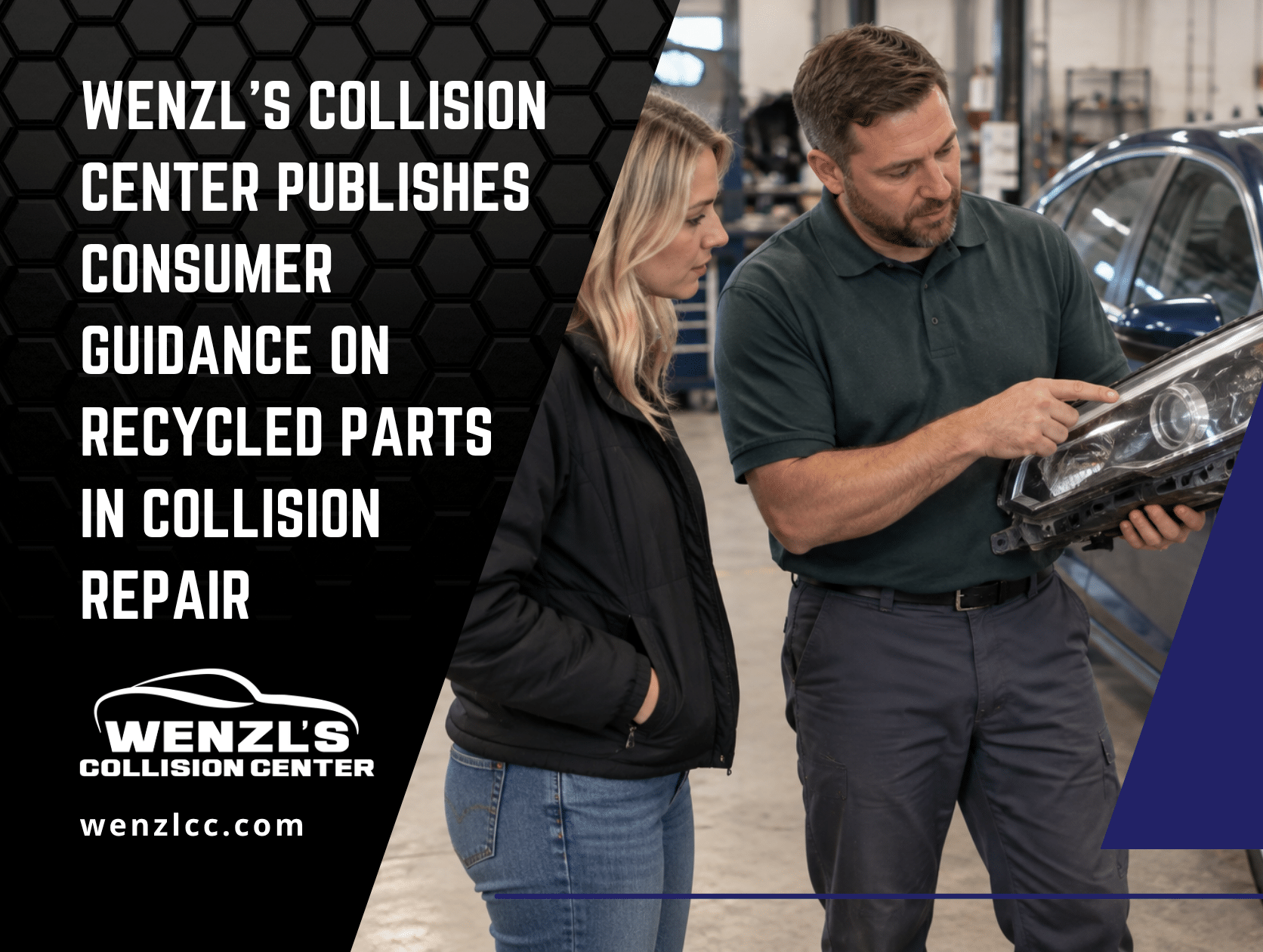
The new guidance expands on Wenzl’s Collision Center’s collision repair information by focusing specifically on how recycled parts can fit into the broader parts-selection and repair-planning process.
Recycled parts should not be evaluated solely by the fact that they were previously installed on another vehicle. Their condition, vehicle application, location, construction, and intended repair operation all matter when determining whether a particular component is appropriate.
Exterior body panels provide one example. Depending on the vehicle and available parts, recycled doors, fenders, hoods, deck lids, liftgates, or other components may sometimes be considered as replacement options.
A used exterior component may require evaluation for previous collision damage, corrosion, dents, alterations, or other conditions that could affect its use. Compatibility with the specific vehicle is also important because components that appear similar can vary between model years, trim levels, body configurations, and equipment packages.
Wenzl’s provides additional information about exterior panel restoration through its auto body repair information.
Part condition is particularly important because a recycled component begins the repair process differently from a newly manufactured part. Technicians can evaluate the component that is actually available rather than assuming its suitability based only on a part description.
The amount of preparation required can also influence the repair plan. A recycled body panel may have an existing finish, minor imperfections, attached components, adhesives, seam sealers, or other characteristics from its previous installation. Those conditions can affect the operations necessary before the component is installed and refinished.
The guidance also distinguishes cosmetic or bolt-on components from parts that have structural, safety-related, or technology-related functions. Not every component should be treated the same way simply because a recycled version is available.
Modern vehicles incorporate different materials and construction methods throughout the body. High-strength steels, aluminum, plastics, composites, and other materials may be used in different locations. Some components can also have specific repair or replacement limitations established for the vehicle.
Manufacturer repair information can therefore become relevant when determining whether a particular component and repair approach are appropriate. The procedures associated with the individual vehicle may address replacement requirements, joining methods, fasteners, adhesives, corrosion protection, or restrictions involving particular components.
The October resource does not present recycled parts as universally appropriate or inappropriate. Instead, it explains that parts selection is a component-specific decision that should correspond with the vehicle, documented repair plan, and applicable procedures.
Fit is another consideration. A replacement component needs to correspond with adjoining panels and attachment locations. Doors, hoods, fenders, liftgates, and other exterior parts interact with hinges, latches, lamps, trim, seals, and surrounding body panels.
Evaluating these relationships during installation can help determine whether the replacement component fits the vehicle as required. A matching general description alone does not establish compatibility with every configuration of the same model.
Vehicle technology can further affect parts selection. Depending on the vehicle, exterior components can contain or provide mounting locations for cameras, sensors, lighting, wiring, antennas, or other equipment.
The presence of these systems means that identifying the correct component may require consideration of more than its basic shape. Vehicle options and installed equipment can influence whether a particular replacement part corresponds with the vehicle being repaired.
Repair planning can also change when the condition of a proposed recycled component is evaluated. If a part has damage, corrosion, modifications, or another condition that affects its suitability, technicians can document that information and determine how it relates to the repair plan.
This component-level evaluation helps explain why the availability of a recycled part does not necessarily mean it will be used. Availability and suitability are separate considerations.
Parts decisions can also involve communication among the vehicle owner, repair facility, and insurer when an insurance claim is involved. A repair estimate may identify a particular part category, while subsequent inspection of the actual replacement component can provide additional information relevant to the final repair plan.
The October guidance is intended to give Lincoln drivers clearer context when terms associated with recycled or previously used parts appear in collision repair documentation. It emphasizes that the terminology alone does not determine whether a component is suitable for a particular repair.
More information about Wenzl’s local repair services is available through the Wenzl’s Collision Center Lincoln location.
The resource also helps distinguish recycled components from repairing the vehicle’s existing damaged part. Repairing an original panel means restoring a component already installed on the vehicle, while using a recycled part involves replacing that component with one previously installed on another vehicle. These are different repair approaches with different considerations.
The central takeaway is that recycled automotive parts are evaluated individually. Condition, compatibility, construction, vehicle equipment, fit, applicable repair procedures, and the operations required to prepare and install the component can all contribute to determining whether it is appropriate for the documented collision repair.
Wenzl’s Collision Center is a family-owned collision repair business serving Lincoln, Nebraska. Located at 4515 N 62nd St, Lincoln, NE, the facility provides collision repair, auto body repair, paintless dent repair, and related vehicle restoration services for drivers in Lincoln and surrounding communities.
###
For more information about Wenzl’s Collision Center, contact the company here:
Wenzl’s Collision Center
Kelli & Martin Wenzl
(402) 466 0821
kwenzl@wenzlcc.com
4515 N 62nd St, Lincoln, NE 68507


